
Andhra Pradesh Chief Minister N Chandrababu Naidu announced several new initiatives for Tirumala Tirupati Devasthanams (TTD), including Aadhaar-based devotee insurance for Rs 2 lakh, the establishment of an SV Museum by TCS Trust, and the introduction of electric buses donated by Reliance Foundation and Bharat Biotech. The plans also include global expansion of Srivari temples, improved Annadanam, integrated hospital services, and significant infrastructure development in Tirupati to make it a services and wedding destination with a Net Zero concept.

During his visit to Kedarnath Dham in Rudraprayag, Uttarakhand, Reliance Industries Chairman and Managing Director Mukesh Ambani donated Rs 10 crore (Rs 100 million) to the temple committee to support the development of pilgrim facilities and infrastructure.

Indian benchmark indices Sensex and Nifty experienced a significant tumble in early trade, primarily driven by heavy selling in HDFC Bank following its quarterly earnings and a sharp spike in Brent crude oil prices due to escalating tensions between the US and Iran. Track Sensex, Nifty

Indian benchmark indices, Sensex and Nifty, traded flat in early deals due to elevated crude oil prices exceeding USD 100 per barrel and persistent geopolitical tensions, which subdued investor risk appetite.

The National Stock Exchange marked its stock market debut at the Bombay Stock Exchange on September 24, 2026, with a traditional gong-ringing ceremony.

Indian benchmark indices Sensex and Nifty continued their upward trend for a second consecutive day, with the Sensex gaining over 800 points, driven by strong performances from heavyweights like Reliance Industries, ICICI Bank, and HDFC Bank, alongside positive cues from easing crude oil prices and robust IT sector earnings.

Following astronaut Shubhanshu Shukla's historic visit to the International Space Station, a significant surge in interest for space science careers is observed among Indian students. Srimathy Kesan of Space Kidz India highlights this shift from traditional fields like engineering and medicine, while Nobel laureate Didier Queloz emphasises the crucial role of curious young scientists in shaping the future.

Civil Aviation Minister K Rammohan Naidu announced India's ambition to produce its first indigenous civilian aircraft within two years through a joint venture. He highlighted the rapid growth of the country's aviation sector, with significant aircraft orders, planned new airports, and potential for manufacturing jet engines and Sustainable Aviation Fuel, underscoring India's increasing role in global aviation.
Shares of Reliance Industries climbed nearly 3 per cent after its digital unit, Jio Platforms, filed draft papers for what could become India's largest-ever initial public offering, with the offering potentially raising around Rs 37,700 crore (USD 4 billion).

Jio Platforms Ltd, the digital and telecommunications arm of Reliance Industries, has approved filing draft papers for an initial public offering (IPO) involving a fresh issue of up to 27 crore equity shares, aiming to unlock value for shareholders and fuel its ambitious expansion into 5G, AI, and global markets.

Tata Consultancy Services (TCS) has stated that the recent suspension of eight IT firms, including itself, from a US green card programme will not impact its workforce strategy or customer engagements, citing its low number of applications and focus on local hiring.

Indian benchmark indices, Sensex and Nifty, experienced declines in early trade due to a significant surge in crude oil prices, exacerbated by escalating tensions in the West Asia. Track how Sensex, Nifty fared on July 23.

What was the fraud? Why did Sebi drag its feet on the order? What options does RIL have now? Samie Modak explains these and more.
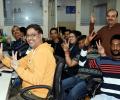
Indian benchmark indices Sensex and Nifty climbed in early trade, driven by buying in blue-chip stocks like Reliance Industries and ICICI Bank, alongside a notable cooling in crude oil prices.

Indian benchmark indices, Sensex and Nifty, closed almost unchanged due to profit-taking in blue-chip stocks, geopolitical uncertainties, fluctuating oil prices, and weak Asian market trends, despite cooling US inflation offering some support.

Reliance Industries (RIL) delivered a better-than-expected operational performance in Q1FY27, driven by a recovery in its oil-to-chemicals (O2C) business and robust gains in the telecom (Jio) segment, though its retail arm missed estimates. Analysts highlight the upcoming Jio Platforms IPO and execution in new energy and consumer businesses as key triggers for the stock's future growth.

Indian stock market benchmark indices Sensex and Nifty rebounded in early trade, driven by a decline in crude oil prices, supportive global cues, fresh foreign fund inflows, and buying in blue-chips like Reliance Industries and HDFC Bank. Track Sensex, Nifty movement on June 22, 2026.

Mukesh Ambani, Chairman of Reliance Industries, has called upon India's engineering talent to spearhead Jio's ambitious artificial intelligence initiative. He emphasized India's role as a creator and global leader in AI, not just a consumer, outlining the execution phase of Reliance Intelligence with partnerships and a focus on developing affordable, language-fluent AI for all Indians.
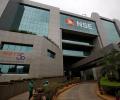
The National Stock Exchange (NSE) has set its initial public offering (IPO) price band at Rs 1,700-1,785 per equity share, with the subscription period running from September 17 to September 21, aiming to raise up to Rs 22,569 crore.
Meta has partnered with Reliance Industries Ltd (RIL) to construct its first AI-powered data centre in India, a 168-megawatt facility located in Jamnagar, marking a significant milestone in Meta's global infrastructure expansion and deepening its strategic partnership with Reliance.
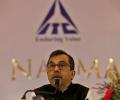
ITC's move to hive off its hotel business will have implications for passive funds and exchange traded funds (ETFs) similar to that seen during the Reliance Industries-Jio Financial demerger. As ITC is part of popular indices such as Nifty and Sensex, it is held by several index funds and ETFs.

'India should not trade away its energy security for temporary tariff relief. Neither signing a trade agreement nor stopping Russian oil purchases can protect it from future US action.'

Prime Minister Narendra Modi has urged for a global framework to combat cross-border cyber frauds and deepfakes, highlighting the need for governments, tech companies, telecom operators, and financial institutions to collaborate. Speaking at the India Mobile Congress 2026, Modi stressed that technology thrives on trust and that India is ready to share its expertise in tackling cyber threats. He also noted the rapid expansion of 5G and the success of digital governance initiatives like Direct Benefit Transfer.

Hindustan Aeronautics Limited (HAL) has delivered LCA Tejas FOC twin-seater trainers and HTT-40 basic trainer aircraft to the Indian Air Force, and Dhruv next-generation helicopters to Pawan Hans. This significant handover, witnessed by Defence Minister Rajnath Singh, marks a crucial step in India's journey towards self-reliance in the aerospace sector, showcasing HAL's capabilities across military, civil rotary-wing, and pilot training aviation.

State-run defence major Hindustan Aeronautics Limited (HAL) has delivered LCA Tejas Final Operational Clearance twin-seater trainers and HTT-40 basic trainer aircraft to the Indian Air Force, along with Dhruv next-generation helicopters to Pawan Hans. This significant handover, witnessed by Defence Minister Rajnath Singh, marks a crucial step in India's journey towards self-reliance in the aerospace sector, showcasing HAL's diverse capabilities in military, civil, and training aviation.
Jio Platforms Ltd, the digital services arm of Reliance Industries, has filed draft papers for an initial public offering (IPO) aiming to raise approximately USD 4 billion (about Rs 37,700 crore), which is expected to be India's largest ever IPO.

Newly listed companies Vedanta Aluminium Metal, SBI Funds Management and Manipal Health Enterprises have entered the Rs 1 trillion mcap list since March 2026.
Indian benchmark indices Sensex and Nifty experienced a significant decline in early trade, driven by renewed tensions between the US and Iran and a subsequent spike in global crude oil prices, creating uncertainty in the market. Track Sensex, Nifty on July 8.
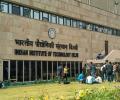
Researchers at IIT Delhi have successfully designed India's first working indigenous micro Graphics Processing Unit (GPU). This significant development aims to reduce the country's reliance on imported GPUs, which are crucial for AI, Machine Learning, and various embedded applications, and could help bridge the digital divide.
Indian stock markets, including the Sensex and Nifty, rebounded significantly, driven by a decline in crude oil prices and positive global cues stemming from hopes of diplomatic progress in US-Iran negotiations.

India is making a significant push to establish itself as a global semiconductor manufacturing hub, driven by strategic investments and policy support. The upcoming SEMICON India 2026 event will showcase the country's advancements and ambitions in this critical industry, which underpins virtually all modern electronic devices and has faced global supply chain vulnerabilities.

Reliance Industries, the country's largest private oil company, is seeking oil and gas fields in Kurdistan.

Zee founder Subhash Chandra has shifted his public statements from allegations against Mukesh Ambani to focusing on settling outstanding Essel Group debt, with borrowers reportedly agreeing to repay obligations.

'The large number of tariff lines in the 90-99 per cent band highlights how deeply embedded Chinese sourcing has become in India's electronics imports.'

Zoho co-founder Sridhar Vembu argues that predictions of AI's catastrophic outcomes are overstated and a global pause in AI development is improbable. He urges India to adopt an independent AI strategy, focusing on extensive foundational R&D across sectors, while remaining wary of market monopolisation attempts by major tech players. Vembu also highlights concerns about AI's impact on human judgment, skill development, and job markets, particularly for junior professionals.

'Giving up is very easy. But don't give up. Try out whatever you can. Something will happen.'

'Everyone has a surname, and I think everyone has an equal responsibility to live up to that name.'
Indian benchmark indices Sensex and Nifty experienced declines in early trade, driven by a surge in Brent crude oil prices above USD 91 per barrel due to escalating tensions between Iran and the US, alongside an increase in US 10-year bond yields. Track Sensex, Nifty on August 18.
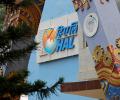
State-run Hindustan Aeronautics Limited (HAL) has delivered LCA Tejas FOC twin-seater trainers and HTT-40 basic trainer aircraft to the Indian Air Force, and Dhruv Next Generation helicopters to Pawan Hans. This significant handover, attended by Defence Minister Rajnath Singh and Civil Aviation Minister K Rammohan Naidu, underscores India's progress towards self-reliance in aerospace, strengthening both military and civil aviation capabilities with indigenous platforms.
Jio Platforms Ltd, the digital and telecommunications arm of Reliance Industries, has received board approval to file draft papers for an initial public offering (IPO) involving a fresh issue of up to 27 crore equity shares. The draft red herring prospectus (DRHP) is expected to be filed with SEBI today, marking a significant value-creation event for Reliance shareholders.
